NEED TO KNOW
- Trump touts a “12 out of 10” meeting for fixing his own disaster.
- Deal cuts tariffs he imposed to stop inflation caused by the tariffs.
- China celebrates by printing more “Made in America” stickers.
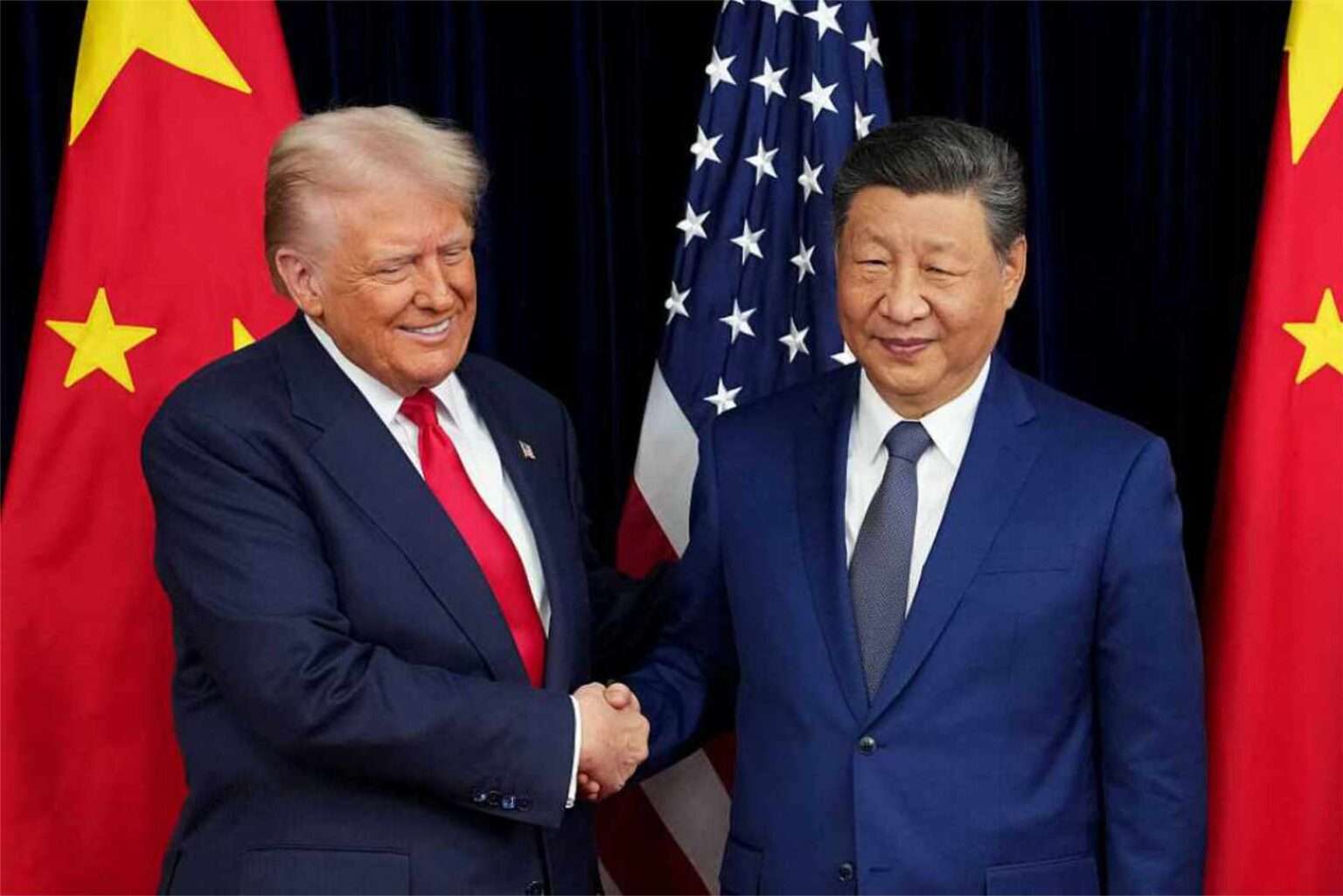
BUSAN, SOUTH KOREA — President Donald Trump declared “a total, complete, unbelievable win” after a meeting with Chinese President Xi Jinping produced a truce that mostly trims tariffs he imposed in the first place. He rated the summit “a twelve out of ten,” which economists said tracks with his habit of inventing both problems and scales.
The agreement pauses China’s limits on rare earth exports, while the U.S. cuts certain tariffs tied to fentanyl from 20 percent to 10 percent. The White House framed the move as relief for consumers. However, analysts noted that the plan repairs a leak caused by the same crew that drilled the hole.
Trump told reporters the talks solved “many, many issues,” then listed several that began during the last round of winning. He praised Xi for being “a strong friend, maybe the strongest,” before reminding everyone that he alone could fix what he just finished breaking.
The Art of the Circular Deal
Manufacturers greeted the news with cautious shrugs. Inputs still cost more, supply chains still wobble, and inventory buffers still run thin. Yet the press office insisted prices will fall soon, right after they rise a little more because markets love to be dramatic.
Meanwhile, the administration rolled out a slogan for the new era: Back to Normal, But Louder. Staffers printed hats within minutes. Reporters asked if the deal touched human rights, labor, or environmental standards. Officials nodded gravely, then clarified that the nod meant they had heard the question.
Chinese media described the talks as “productive patience.” They highlighted Beijing’s option to revisit export limits later, a feature the U.S. called “flexibility” and critics called “a reminder of who owns the joystick.” Still, both sides celebrated the handshake, which remains the world’s cheapest photo and most expensive policy.
Farm Country’s Déjà Vu
On the farm front, the president promised “massive” soybean purchases. Farmers checked their books, then checked Brazil’s. They remembered the last time they heard that word and also remembered the auction where they sold the tractor to pay for the feed that paid for the loan that paid for the tractor.
Supporters cheered the deal as proof that tough talk works eventually, if you ignore the middle part where it does not. Detractors tallied lost jobs, higher costs, and a rare earths dependency that one meeting cannot unwind. Both sides agreed the flags behind the podium looked fantastic.
In the end, the administration called the truce historic. Therefore, historians now face the hard task of labeling an agreement that fixes the very mess it brags about fixing. The president offered guidance: “Nobody fixes like me. Sometimes you have to make a problem big enough to see it.”
We rate the deal a solid loop: it begins where it ends, and it ends where it begins, said Dr. Felicity Chow, Global Trade Institute